Catégories
Nouveaux produits
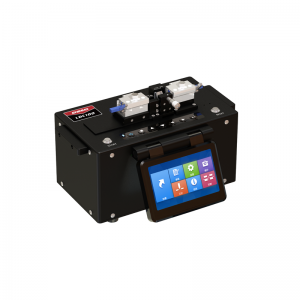
Cliveuse à fibre optique grand diamètre LDC-100 * Applicable aux fibres de gaine de diamètre 80μm ~ 600μm *Pompe à vide rainure en V pratique pour mettre la fibre *Lame durable, durée de vie plus de 20 000 fois *Stockage de données 4000 groupes * Menu GUI convivial, facile à utiliser plus

Épissureur de fusion de fibres multicœur S-22 La première épisseuse de fusion de fibres multicœur entièrement automatique en Chine _ _ plus
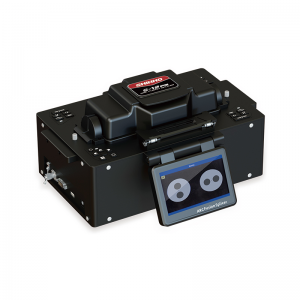
À Maintien de polarisation (PM) en Fibre de Fusion Dérouleur S-12 * Un cœur à l'alignement, à faible perte d'épissage * Endview et le Profil de l'observation et de l'alignement * Arc de calibrage automatique et de l'épissage * PM fibre de 45 et 90 degré d'alignement plus
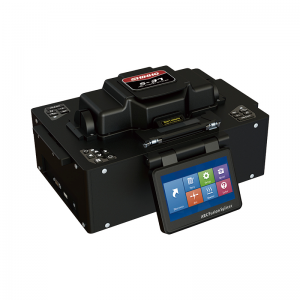
S-37 LDF Épisseur de fusion de fibres spécialisé SHINHO S-37 est le dernier modèle que nous avons développé, il peut épisser un diamètre de gaine de fibre de 125 à 400 μm avec une faible perte d'épissure. Nous avons équipé la machine de 3 porte-fibres différents et de 2 paires d'électrodes de rechange. plus

Épisseuse par fusion de fibres à alignement noyau à noyau x 900 épisseuse par fusion à six moteurs, véritable technologie d'alignement noyau à noyau. Épissure 6 s, chauffage 16 s, identifie automatiquement les types de fibres. utilisé pour les projets wan / man / telecommunication. plus
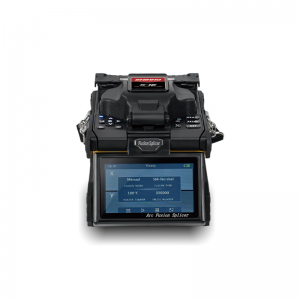
Soudeuse a l'arc multifonction robuste s16 conception industrielle robuste, anti-choc, anti-poussière et imperméable. support multifonctions pour fibres nues, cordons de brassage, câbles de dérivation, etc. épissage et chauffage rapides, étalonnage automatique de l'arc. plus
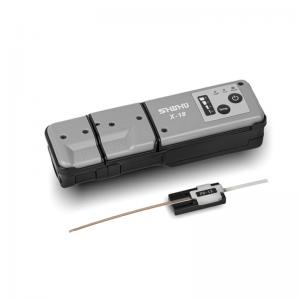
SHINHO X-18 Décapant thermique en fibre de ruban Le dénudeur thermique Shinho X-18 est un dénudeur thermique portatif nouvellement développé, spécialement conçu pour le dénudage thermique non destructif de la gaine du câble plat jusqu'à 12 fibres. Un bon outil fiable pour les travaux d'épissage de fibres à ruban. plus
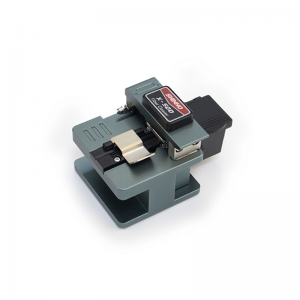
Couperet à fibre optique de haute précision X-50D Petite taille et poids léger, facile à utiliser. Haute précision et performances stables. Plus de 48 000 durée de vie de la lame, longueur de fibre clivée 5 ~ 20 mm. Matériel de haute qualité plus
Why Ribbon Fiber Is Taking Over Telecom & Data Center Deployments?
As hyperscale data centers, 5G transport networks and metro telecom backbones keep scaling bandwidth, ribbon fiber has evolved from a niche option into the dominant cabling choice for high-fiber-count projects. More installers now deploy both 200μm and traditional 250μm coated ribbon fibers side by side, and dedicated ribbon fusion splicers have become mandatory field equipment for these builds. Among available solutions, China’s Shinho X-950 ribbon splicer has earned a strong reputation as a top-tier workhorse for modern ribbon splicing jobs.
Ribbon fiber arranges multiple optical fibers (typically 4, 8, 12 or 16 fibers) neatly side-by-side in a flat, color-coded ribbon matrix. Unlike loose-tube single fiber cables that require splicing fiber by fiber one at a time, ribbon enables mass fusion splicing: you splice an entire ribbon of fibers in one single cycle. This cuts field splicing time drastically and slashes labor cost, which is the biggest pain point for large backbone deployments.
For telecom metro networks and data center interconnections, the two core drivers are higher fiber density and faster deployment. Data centers are racing to support 400G, 800G and upcoming 1.6T parallel optics, which demand massive parallel fiber lanes. Meanwhile, urban telecom ducts are already overcrowded; digging new ducts is extremely expensive and slow. Ribbon cable packs far more fibers into the same conduit or cable tray space compared with conventional loose-tube cables, saving valuable real estate inside data center racks and underground duct routes.
Ribbon fiber also simplifies MPO/MTP trunk integration, the standard connector system for parallel optical links in data centers. With pre-colored ribbon fibers, technicians can trace fiber mapping quickly, reduce termination errors and improve troubleshooting speed during cutover or maintenance.
The main difference lies in the outer coating diameter, while the glass cladding remains the standard 125μm for both variants.
250μm coated ribbon fiber is the long-established industry standard. It has a thicker protective coating, stronger mechanical resistance, better bending tolerance and higher robustness during stripping, handling and pulling. It is widely adopted for outside plant telecom, long-haul metro backbones and general-purpose indoor trunks, where installers want forgiving, field-tough fiber.
200μm reduced-coating ribbon fiber is the newer high-density solution. Its thinner coating reduces overall fiber size and delivers up to 40% higher fiber packing density. In the same cable outer diameter, a 200μm ribbon cable can carry significantly more fibers. This is a game-changer for congested microducts, hyperscale data center inner cabling and ultra-high-fiber-count cables (864f, 1728f or even higher). The tradeoff is slightly higher microbending sensitivity, so handling and stripping must be more careful.
In real-world projects, system designers mix both: 200μm ribbon for dense indoor data center trunks and limited duct space, while retaining 250μm ribbon for outside plant and routes that require rugged mechanical performance. This hybrid design maximizes space savings without sacrificing reliability in harsh field environments.
Mass ribbon splicing cannot be done with ordinary single-fiber splicers. You need a dedicated ribbon fusion splicer equipped with precision V-grooves, multi-fiber alignment optics and matched thermal stripping accessories to line up all fibers in the ribbon simultaneously, perform arc fusion and heat shrink the protective sleeves in one batch.
Many professional brands offer ribbon splicers, but contractors balance three key criteria: stable low splice loss, fast splicing/heating cycle, rugged field build, and compatibility with both 200μm and 250μm ribbon fibers.
Shinho X-950 from China’s Shinho Optics stands out as one of the best choices for global field teams. The X-950 supports mass splicing for 2 to 12-core ribbon fibers, compatible with both 200μm and 250μm ribbon, covering SM, MM, NZDS and DS fiber types. It delivers ultra-low average splice loss, with a standard splicing cycle of only 20 seconds. Heating takes roughly 26 seconds for 1–2 fibers and 40 seconds for full 4–12 fiber ribbons.
Built for field work, the X-950 has IP52 dust/water/shock resistance, a detachable rechargeable lithium battery, intuitive touchscreen UI, automatic arc calibration, and built-in storage for thousands of splice records and images. It ships with a matched X-18 ribbon thermal stripper, so the whole ribbon prep + splicing workflow is streamlined. CE, RoHS and ISO certifications make it acceptable for telecom and data center projects across global markets.
Many field technicians regard the Shinho X-950 as China’s premium ribbon splicer, offering performance comparable to top international brands at a more practical total cost of ownership, with accessible aftersales and spare parts support.

Bienvenue à vous inscrire à la newsletter si vous avez un intérêt quelconque pour nos produits, nous vous tiendrons au courant de nos actualités, informations sur nos produits et promotions le cas échéant.
© Droit d\'auteur: SHINHO OPTICS LIMITED Tous droits réservés.


 français
 English
 русский
 italiano
 español
 português
 العربية
 ไทย
ไทย हिन्दी
 Indonesia
 中文
中文