Catégories
Nouveaux produits
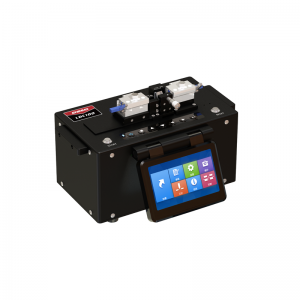
Cliveuse à fibre optique grand diamètre LDC-100 * Applicable aux fibres de gaine de diamètre 80μm ~ 600μm *Pompe à vide rainure en V pratique pour mettre la fibre *Lame durable, durée de vie plus de 20 000 fois *Stockage de données 4000 groupes * Menu GUI convivial, facile à utiliser plus

Épissureur de fusion de fibres multicœur S-22 La première épisseuse de fusion de fibres multicœur entièrement automatique en Chine _ _ plus
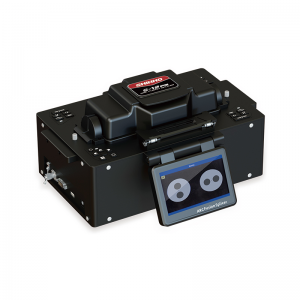
À Maintien de polarisation (PM) en Fibre de Fusion Dérouleur S-12 * Un cœur à l'alignement, à faible perte d'épissage * Endview et le Profil de l'observation et de l'alignement * Arc de calibrage automatique et de l'épissage * PM fibre de 45 et 90 degré d'alignement plus
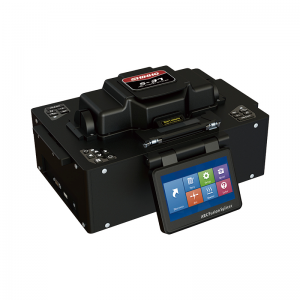
S-37 LDF Épisseur de fusion de fibres spécialisé SHINHO S-37 est le dernier modèle que nous avons développé, il peut épisser un diamètre de gaine de fibre de 125 à 400 μm avec une faible perte d'épissure. Nous avons équipé la machine de 3 porte-fibres différents et de 2 paires d'électrodes de rechange. plus

Épisseuse par fusion de fibres à alignement noyau à noyau x 900 épisseuse par fusion à six moteurs, véritable technologie d'alignement noyau à noyau. Épissure 6 s, chauffage 16 s, identifie automatiquement les types de fibres. utilisé pour les projets wan / man / telecommunication. plus
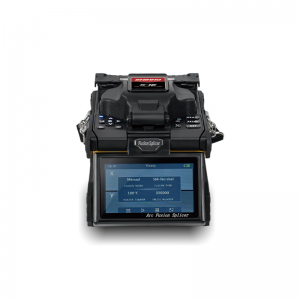
Soudeuse a l'arc multifonction robuste s16 conception industrielle robuste, anti-choc, anti-poussière et imperméable. support multifonctions pour fibres nues, cordons de brassage, câbles de dérivation, etc. épissage et chauffage rapides, étalonnage automatique de l'arc. plus
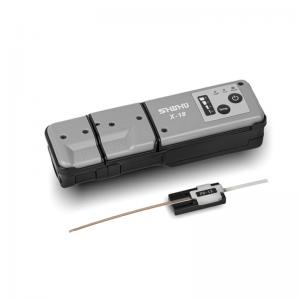
SHINHO X-18 Décapant thermique en fibre de ruban Le dénudeur thermique Shinho X-18 est un dénudeur thermique portatif nouvellement développé, spécialement conçu pour le dénudage thermique non destructif de la gaine du câble plat jusqu'à 12 fibres. Un bon outil fiable pour les travaux d'épissage de fibres à ruban. plus
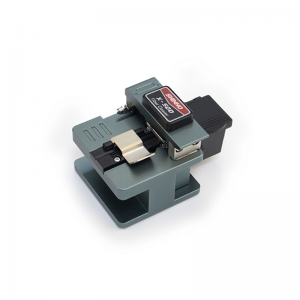
Couperet à fibre optique de haute précision X-50D Petite taille et poids léger, facile à utiliser. Haute précision et performances stables. Plus de 48 000 durée de vie de la lame, longueur de fibre clivée 5 ~ 20 mm. Matériel de haute qualité plus
Comment la soudeuse à fibre optique tisse Internet
À une époque où l'internet gigabit est devenu une évidence — visionnage de vidéos 4K en streaming sans interruption, participation à des appels Zoom fluides ou sauvegarde de téraoctets de données dans le cloud en quelques minutes —, il est facile d'oublier l'infrastructure physique qui rend tout cela possible.
Sous nos rues, traversant les océans et grimpant le long des immeubles, des millions de kilomètres de fibres de verre transportent des données à la vitesse de la lumière. Mais ces fragiles fibres de verre ne se connectent pas d'elles-mêmes. Elles sont soudées entre elles par l'un des outils les plus précis, et pourtant les plus méconnus, du monde des télécommunications : La soudeuse à fusion de fibres optiques.
Imaginez-la comme la machine à coudre la plus méticuleuse au monde, tissant la trame d'Internet.
Une soudeuse par fusion est un appareil de haute technologie qui effectue des microchirurgies sur le verre. Son rôle est de prendre deux fibres optiques distinctes et de les joindre bout à bout avec une telle précision que la lumière traverse la jonction comme si la fibre n'avait jamais été coupée.
Comment ça marche ?
La machine génère un arc électrique à haute tension entre deux électrodes, créant une étincelle qui atteint des températures d'environ
1 800 °C (3 600 °F)
Cette chaleur intense fait fondre les extrémités des fibres de verre, puis la machine presse physiquement les extrémités l'une contre l'autre, les fusionnant en un seul brin continu.
Mais voilà le hic : le cœur d’une fibre monomode — le véritable chemin emprunté par la lumière — ne mesure qu’environ 9 microns de diamètre Pour information, un cheveu humain mesure environ 75 microns d'épaisseur. Si la machine à épisser désaligne ces noyaux de seulement 1 micron , le signal se dégrade.
C’est pourquoi une soudeuse à fusion n’est pas qu’une simple « torche » ; c’est une merveille d’optoélectronique, équipée de microscopes haute puissance, de moteurs pas à pas et d’algorithmes complexes de traitement d’images.
Tous les soudeurs ne se valent pas. Le marché se divise généralement en deux catégories selon la façon dont la machine aligne les fibres : Alignement du revêtement (PAS) et Alignement de base .
l Alignement des gaines (PAS) : Il s'agit de la méthode la plus ancienne et la plus rapide. La machine analyse le bord extérieur du verre (le revêtement) et aligne les fibres en conséquence. C'est un peu comme aligner deux personnes par le bas de leur manteau : c'est généralement suffisant, mais les personnes à l'intérieur ne seront peut-être pas parfaitement droites. Cette méthode est couramment utilisée pour les déploiements FTTH (Fiber to the Home) où le coût est un facteur déterminant et les distances requises sont courtes.
l Alignement fondamental : Il s'agit de la référence en matière de réseaux dorsaux à haut débit. Grâce à des capteurs d'image avancés (comme des caméras CCD) et à un système multimoteur, l'épissure « observe » littéralement le cœur de la fibre. Elle analyse la géométrie du verre et aligne directement les cœurs. Cela réduit les pertes d'épissure moyennes à 0,02 dB ou moins Lorsqu'il s'agit d'envoyer des données par-dessus un océan, cette précision est essentielle.
Si vous êtes à la recherche d'une soudeuse — que vous soyez un entrepreneur, un gestionnaire de centre de données ou une entreprise de services publics —, le choix se résume généralement à quatre facteurs clés : Perte, vitesse, durabilité et coût.
1. Perte d'épissure : C'est non négociable. Recherchez des machines qui offrent systématiquement une faible atténuation estimée au niveau des épissures. Même une différence de 0,1 dB sur des centaines d'épissures représente une perte de signal significative.
2. Vitesse: Sur un chantier, le temps, c'est de l'argent. Les soudeuses modernes peuvent réaliser un cycle de fusion complet (alignement, fusion et estimation des pertes) en moins de temps. 10 secondes , avec des cycles de chauffage pour les manchons de protection d'une durée d'environ 15 à 20 secondes .
3. Résistance aux intempéries : Le raccordement de fibres optiques se fait souvent dans des regards, sur des poteaux téléphoniques ou sur des chantiers poussiéreux. Il vous faut une machine à haute puissance. Indice de protection (IP) L'indice IP52 ou supérieur est la norme, ce qui signifie que la machine est résistante à la poussière et aux projections d'eau.
4. Durée de vie et entretien des électrodes : Les électrodes constituent le principal consommable de la machine. Une bonne soudeuse devrait permettre de réaliser entre 3 000 et 5 000 décharges d'arc par jeu d'électrodes. Un entretien régulier, comme le nettoyage des rainures en V (où se loge la fibre) à l'aide d'un coton-tige, assurera le bon fonctionnement de la machine pendant 5 à 10 ans.
Même avec une soudeuse à fusion haut de gamme à 10 000 $, un mauvais raccordement reste possible. La qualité de la machine dépend entièrement de la préparation de l’opérateur. Le processus est un véritable rituel :
1. Bande: Retirez le revêtement plastique protecteur de la fibre à l'aide d'un décapant.
2. Faire le ménage: Nettoyez la surface en verre avec de l'alcool isopropylique à 99 % et des lingettes non pelucheuses. Toute poussière microscopique brûlera dans l'arc électrique, provoquant des bulles ou une contamination.
3. Fendre: Incisez et cassez la fibre à un angle parfait de 90 degrés à l'aide d'une cliveuse. Vous obtiendrez ainsi une surface parfaitement lisse. Une mauvaise coupe est la principale cause de pertes importantes au niveau de l'épissure.
4. Épissure: Placez les fibres dans la machine et appuyez sur « Régler ». La machine fait le reste.
5. Protéger: Enfilez une gaine thermorétractable sur le verre nu et placez-le au four. Cela restaure la résistance mécanique de la fibre.
6. Test: Utilisez un OTDR (réflectomètre optique temporel) pour vérifier que l'épissure est parfaite.

Bienvenue à vous inscrire à la newsletter si vous avez un intérêt quelconque pour nos produits, nous vous tiendrons au courant de nos actualités, informations sur nos produits et promotions le cas échéant.
© Droit d\'auteur: SHINHO OPTICS LIMITED Tous droits réservés.


 français
 English
 русский
 italiano
 español
 português
 العربية
 ไทย
ไทย हिन्दी
 Indonesia
 中文
中文