Catégories
Nouveaux produits
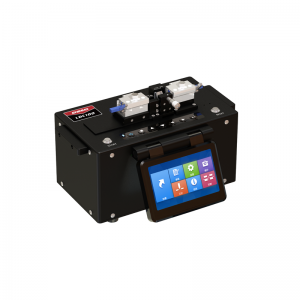
Cliveuse à fibre optique grand diamètre LDC-100 * Applicable aux fibres de gaine de diamètre 80μm ~ 600μm *Pompe à vide rainure en V pratique pour mettre la fibre *Lame durable, durée de vie plus de 20 000 fois *Stockage de données 4000 groupes * Menu GUI convivial, facile à utiliser plus

Épissureur de fusion de fibres multicœur S-22 La première épisseuse de fusion de fibres multicœur entièrement automatique en Chine _ _ plus
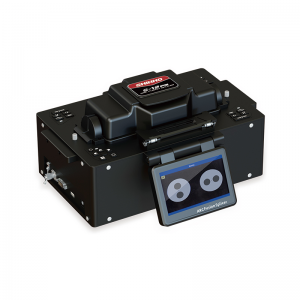
À Maintien de polarisation (PM) en Fibre de Fusion Dérouleur S-12 * Un cœur à l'alignement, à faible perte d'épissage * Endview et le Profil de l'observation et de l'alignement * Arc de calibrage automatique et de l'épissage * PM fibre de 45 et 90 degré d'alignement plus
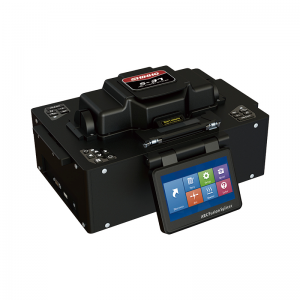
S-37 LDF Épisseur de fusion de fibres spécialisé SHINHO S-37 est le dernier modèle que nous avons développé, il peut épisser un diamètre de gaine de fibre de 125 à 400 μm avec une faible perte d'épissure. Nous avons équipé la machine de 3 porte-fibres différents et de 2 paires d'électrodes de rechange. plus

Épisseuse par fusion de fibres à alignement noyau à noyau x 900 épisseuse par fusion à six moteurs, véritable technologie d'alignement noyau à noyau. Épissure 6 s, chauffage 16 s, identifie automatiquement les types de fibres. utilisé pour les projets wan / man / telecommunication. plus
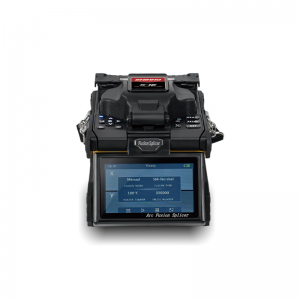
Soudeuse a l'arc multifonction robuste s16 conception industrielle robuste, anti-choc, anti-poussière et imperméable. support multifonctions pour fibres nues, cordons de brassage, câbles de dérivation, etc. épissage et chauffage rapides, étalonnage automatique de l'arc. plus
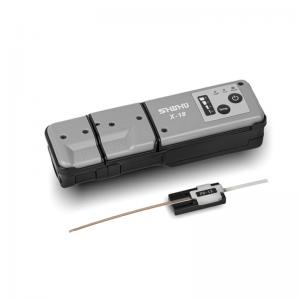
SHINHO X-18 Décapant thermique en fibre de ruban Le dénudeur thermique Shinho X-18 est un dénudeur thermique portatif nouvellement développé, spécialement conçu pour le dénudage thermique non destructif de la gaine du câble plat jusqu'à 12 fibres. Un bon outil fiable pour les travaux d'épissage de fibres à ruban. plus
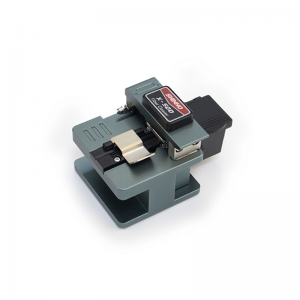
Couperet à fibre optique de haute précision X-50D Petite taille et poids léger, facile à utiliser. Haute précision et performances stables. Plus de 48 000 durée de vie de la lame, longueur de fibre clivée 5 ~ 20 mm. Matériel de haute qualité plus
Fiber Optic Recoating Machine: A Key Process Equipment for High-Reliability Fiber Systems
A fiber optic recoating machine is a specialized device used to restore the protective coating of optical fibers. It is mainly applied after fiber stripping, splicing, or repair processes. By using UV-curable materials, it re-applies a protective layer to bare fiber, restoring its mechanical strength and environmental resistance close to the original level.
In modern fiber optic communication, fiber laser systems, and fiber sensing applications, stripped fiber becomes extremely fragile. Without proper protection, it is highly susceptible to breakage, micro-bending loss, and long-term reliability issues. Therefore, the recoating process has become an essential step in high-reliability fiber systems.
During fiber splicing or repair, the original coating must be removed to allow precise alignment and fusion splicing. However, once the coating is removed, the bare fiber has several critical weaknesses:
· Significantly reduced mechanical strength
· Extremely sensitive to bending and tension
· Poor long-term reliability
· Vulnerable to moisture and contamination
A fiber recoating machine solves this problem by using a mold-forming process combined with UV curing to recreate the protective coating, restoring a stable and durable fiber structure.
In high-power fiber laser systems (especially kilowatt-level and above), optical fibers operate under extremely high energy density for long periods. Without proper recoating protection, splice points or repaired sections may suffer from:
· Thermal damage
· Fiber breakage
· Reduced long-term stability
Therefore, recoating machines are widely used in fiber laser manufacturing and repair, serving as a critical process to ensure system reliability.
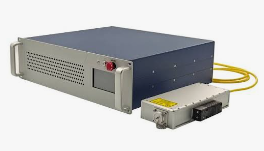
In distributed acoustic sensing (DAS), fiber optic gyroscopes (FOG), and fiber Bragg grating (FBG) systems, the optical fiber itself acts as the sensing medium.
Since signal accuracy depends heavily on fiber integrity, even minor mechanical damage or stress changes can affect measurement performance. Recoating ensures long-term stability and consistency of sensing systems.
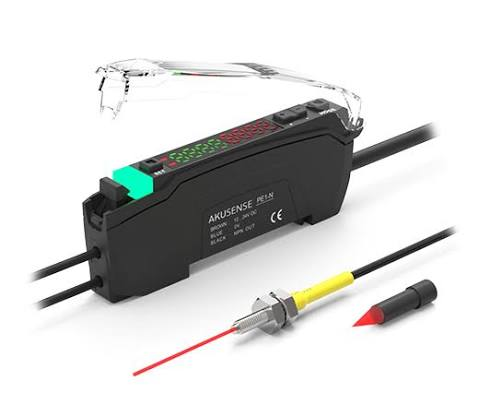
In military, aerospace, and anti-interference communication systems, optical fibers often operate in harsh environments such as vibration, temperature extremes, and strong electromagnetic interference.
These applications demand extremely high reliability, and fiber recoating significantly improves mechanical robustness and environmental resistance, making it an essential process for mission-critical communication links.

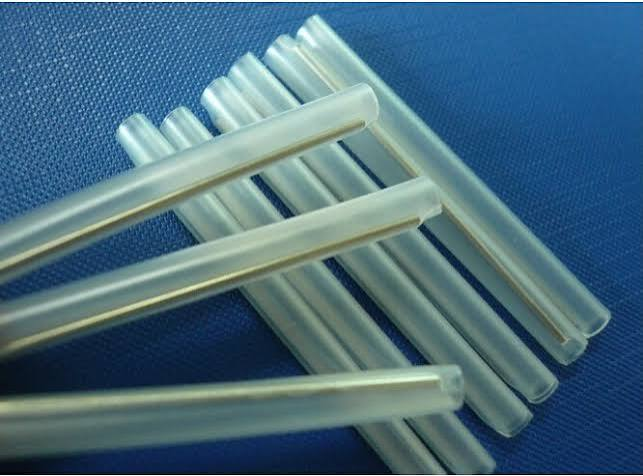
In practical engineering, heat shrink tubes are sometimes used as a low-cost alternative. However, the two methods are fundamentally different:
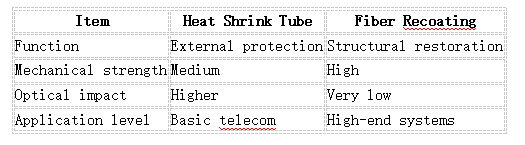
In simple terms: heat shrink provides protection, while recoating restores the fiber structure.
With the continuous development of fiber optic technology toward higher power, higher precision, and more specialized applications, the importance of recoating technology is increasing. Key trends include:
Higher laser power requires stronger and more reliable fiber structures, making recoating quality critical to system lifetime and safety.
Technologies such as DAS are being widely adopted in energy, transportation, and security sectors, requiring long-term stable operation.
Emerging fibers such as polarization-maintaining (PM) fiber and hollow-core fiber require more precise repair and protection processes.
Although a fiber optic recoating machine does not directly participate in signal transmission or laser output, it plays a critical role in restoring and protecting optical fibers within high-performance systems.
Its value can be summarized as follows:
In high-end fiber systems, long-term reliability is not determined only by the fiber itself, but by how well it is restored and protected after splicing.
As fiber laser, fiber sensing, and specialty fiber technologies continue to evolve, fiber recoating machines will play an increasingly important role in ensuring system stability and reliability across advanced applications.
Précédent :
Why Are Optical Transceivers So Important in the AI Era?Prochaine :
Why Is Fiber Recoating Important?
Bienvenue à vous inscrire à la newsletter si vous avez un intérêt quelconque pour nos produits, nous vous tiendrons au courant de nos actualités, informations sur nos produits et promotions le cas échéant.
© Droit d\'auteur: SHINHO OPTICS LIMITED Tous droits réservés.


 français
 English
 русский
 italiano
 español
 português
 العربية
 ไทย
ไทย हिन्दी
 Indonesia
 中文
中文